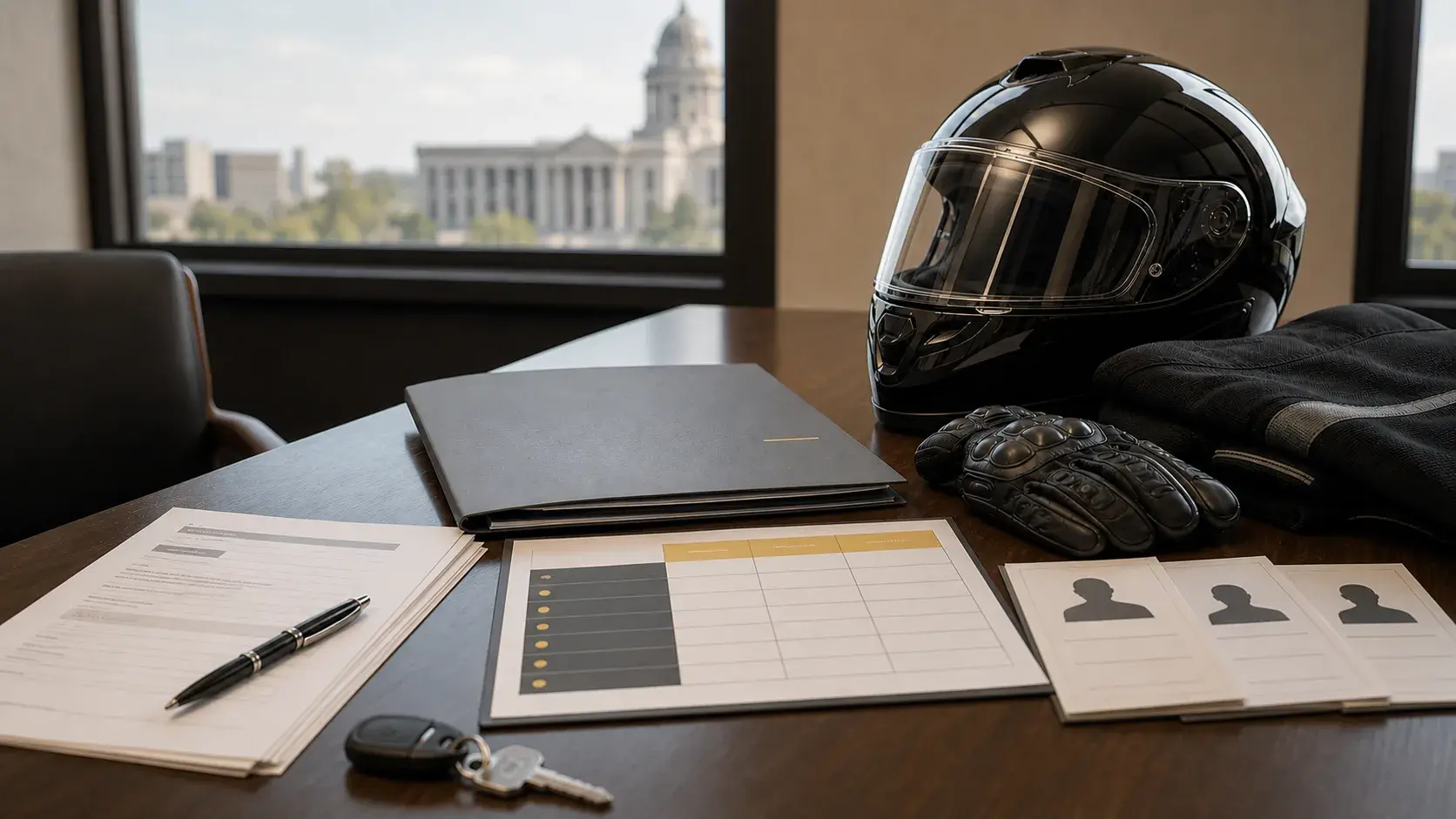
Motorcycle helmet, gloves, blank lawyer comparison checklist, case file, attorney profile cards, insurance papers, and motorcycle key on a law office conference table

Choosing a lawyer

How to choose a motorcycle accident lawyer after a serious Oklahoma crash.

After a serious motorcycle crash, choosing a lawyer can feel like one more decision you did not ask for. This guide gives riders and families practical questions to ask before trusting someone with the crash, the medical record, and the insurance fight.

For accepted motorcycle-injury matters, attorney fees are contingent on recovery and governed by a written engagement agreement.

Test the fit

You are not shopping for a slogan. You are choosing a case team.

The lawyer you choose may affect what evidence is preserved, how insurance pressure is handled, whether the injury record is understood, and whether the case is prepared for a real fight. The questions below help you compare substance instead of noise.

Oklahoma focus

Do they actually know where this case will live?

A serious Oklahoma motorcycle case may turn on the crash city, county, court, police agency, hospital system, tow yard, and local roadway context. A lawyer should be able to talk about the Oklahoma facts without making the case sound generic.

Questions to ask

  • Where would this case likely be handled if it has to be filed?
  • What local records, agencies, hospitals, or tow sources should be checked early?
  • How do Oklahoma comparative-fault and insurance issues affect the review?

What to look for

  • Oklahoma city and county content that is specific, not copied from a national template.
  • Clear discussion of Oklahoma police, court, venue, and insurance context.
  • A process for preserving local video, records, motorcycle, helmet, and gear proof.

Motorcycle crash proof

Can they answer rider-blame arguments with evidence?

Motorcycle cases often start with assumptions about speed, helmets, visibility, lane position, or risk-taking. The lawyer should know how to test those assumptions against physical evidence, witnesses, video, roadway conditions, and medical proof.

Questions to ask

  • What evidence would you look for before accepting a speed or lane-position accusation?
  • How do you handle a driver saying they never saw the motorcycle?
  • What should happen to the motorcycle, helmet, gear, phone, and camera?

What to look for

  • Motorcycle-specific crash guides, not just general car-wreck pages.
  • Evidence checklists for scene photos, witnesses, video, bike, gear, medical records, and report issues.
  • Careful language that treats statistics as patterns, not automatic proof in one crash.

Serious injury understanding

Will they wait for the real medical picture?

A rider may be facing brain symptoms, spine pain, fractures, surgery, road rash, internal injury, permanent restrictions, work loss, and daily-life changes. A lawyer should know that the first hospital visit may not tell the whole story.

Questions to ask

  • How do you track symptoms and treatment when the injury picture is still changing?
  • What records help explain work loss, future care, and daily-life changes?
  • How do you handle early offers before treatment is clear?

What to look for

  • A serious-injury guide that explains medical timelines without giving medical advice.
  • A case-value approach based on proof, not average settlement shortcuts.
  • A process for bills, liens, restrictions, wage loss, future care, and family observations.

Insurance and coverage review

Will they look beyond the first policy?

A motorcycle crash can involve the at-fault driver's policy, the motorcycle policy, household auto policies, umbrella coverage, health insurance, liens, and uninsured or underinsured motorist coverage. A lawyer should build a coverage map early.

Questions to ask

  • What policies should we gather before assuming there is only one source of coverage?
  • How do you handle uninsured or underinsured motorist questions?
  • What should I do if an adjuster asks for a recorded statement or broad release?

What to look for

  • Insurance-checkup tools for declarations pages, claim letters, adjuster contacts, and release pressure.
  • Clear warning to separate property-damage paperwork from injury releases.
  • Plain explanation of who an adjuster may represent.

Trial preparation

Are they preparing the case for pressure, not just paperwork?

Many cases settle. That does not mean trial preparation is optional. Fair settlement pressure usually comes from facts organized well enough to survive blame arguments, coverage fights, discovery, mediation, and trial if needed.

Questions to ask

  • What facts would you want ready before making a serious demand?
  • How do you decide whether a lawsuit is needed?
  • Who prepares the case if depositions, mediation, or trial become necessary?

What to look for

  • Named responsible attorneys, source-linked profiles, and clear written-engagement boundaries.
  • A case timeline that explains filing, discovery, mediation, and trial preparation without scare tactics.
  • Named lawyers with courtroom experience, not a faceless lead form.

Clear communication and fee terms

Will you know what is happening and what it costs to start?

A hurt rider should not have to decode lawyer language. The intake should be clear, the next steps should be understandable, and the fee message should answer the immediate fear: whether it costs money to ask for help.

Questions to ask

  • Who reviews the information I send?
  • What happens after I submit a case review?
  • How are attorney fees and case expenses handled if no money is recovered?

What to look for

  • Plain forms that ask for crash facts without demanding perfect legal conclusions.
  • Clear written attorney-fee and case-expense terms before representation begins.
  • Disclaimers that are visible but do not bury the human answer.

Warning signs

Be careful when the pitch is louder than the process.

You do not need to be cynical. You do need to know whether the lawyer has a serious plan for proof, injuries, coverage, communication, and litigation if a fair settlement is not offered.

A site that could be for any state

If the content only swaps in city names, it may not help with Oklahoma agencies, courts, roads, crash data, insurance issues, or local proof.

A quick number before the injury picture is known

A serious motorcycle case should not be reduced to a calculator, average, or rushed settlement range before treatment, coverage, liens, and proof are understood.

Pressure to give broad statements too early

A lawyer should first identify who is requesting a statement and what policy or claim is involved. The rider's own policy may create cooperation duties that differ from another driver's request. Good advice should protect policy rights while preventing guesses, overly broad authorizations, or uninformed releases.

No plan for the motorcycle and gear

The bike, helmet, jacket, gloves, boots, camera, phone, tow records, and repair papers can be evidence. They should not be treated as an afterthought.

All slogans, no process

Rider-friendly language is not enough by itself. Look for a real process for proof, medical records, insurance coverage, communication, filing decisions, and trial preparation.

Before the first call

You do not need everything. Bring what you have.

A useful case review can start before the police report is ready and before treatment is finished. These details help a lawyer understand what needs to be protected first.

Request a case review

Crash basics

Date, time, city, county, road, intersection, direction of travel, police agency, report number, tow yard, and where the motorcycle is now.

Medical picture

Hospitals, doctors, known injuries, symptoms that changed, surgeries, imaging, restrictions, missed work, and upcoming appointments.

Insurance contacts

Adjuster names, claim numbers, letters, emails, texts, recorded-statement requests, declarations pages, and any release papers.

Proof that may disappear

Photos, witness names, camera locations, dashcam or helmet-cam details, business video leads, damaged gear, and social messages about the crash.

Questions riders ask

Questions to answer before you decide who to call.

How do I choose a motorcycle accident lawyer in Oklahoma?

Look for Oklahoma focus, motorcycle-specific evidence work, serious-injury understanding, insurance coverage review, clear communication, and the ability to prepare the case for litigation if needed.

Should I choose a national motorcycle brand or an Oklahoma lawyer?

The answer depends on who will actually review, investigate, communicate, and handle the case. A serious Oklahoma crash needs Oklahoma facts, local records, court and venue awareness, insurance review, and named lawyers responsible for the work.

What should I ask during an initial case review?

Ask what evidence should be preserved now, what insurance papers matter, how medical treatment affects timing, who will review the case, what fee applies if money is recovered, and what happens if settlement is not fair.

Does a motorcycle lawyer need to ride?

Riding experience can help a lawyer understand the rider's perspective, but it is not the only question. The legal work still depends on evidence, injuries, insurance, venue, communication, and litigation readiness.

Can I ask for help before I have the police report?

Yes. You can begin with the crash date, location, police agency, injuries, insurance contacts, motorcycle and gear location, photos, witnesses, and any report number you have. The report can be requested later.

Is this page legal advice?

No. It is general information to help Oklahoma riders and families evaluate lawyer fit after a serious crash. A real case depends on the crash facts, injuries, insurance, deadlines, venue, and available proof.