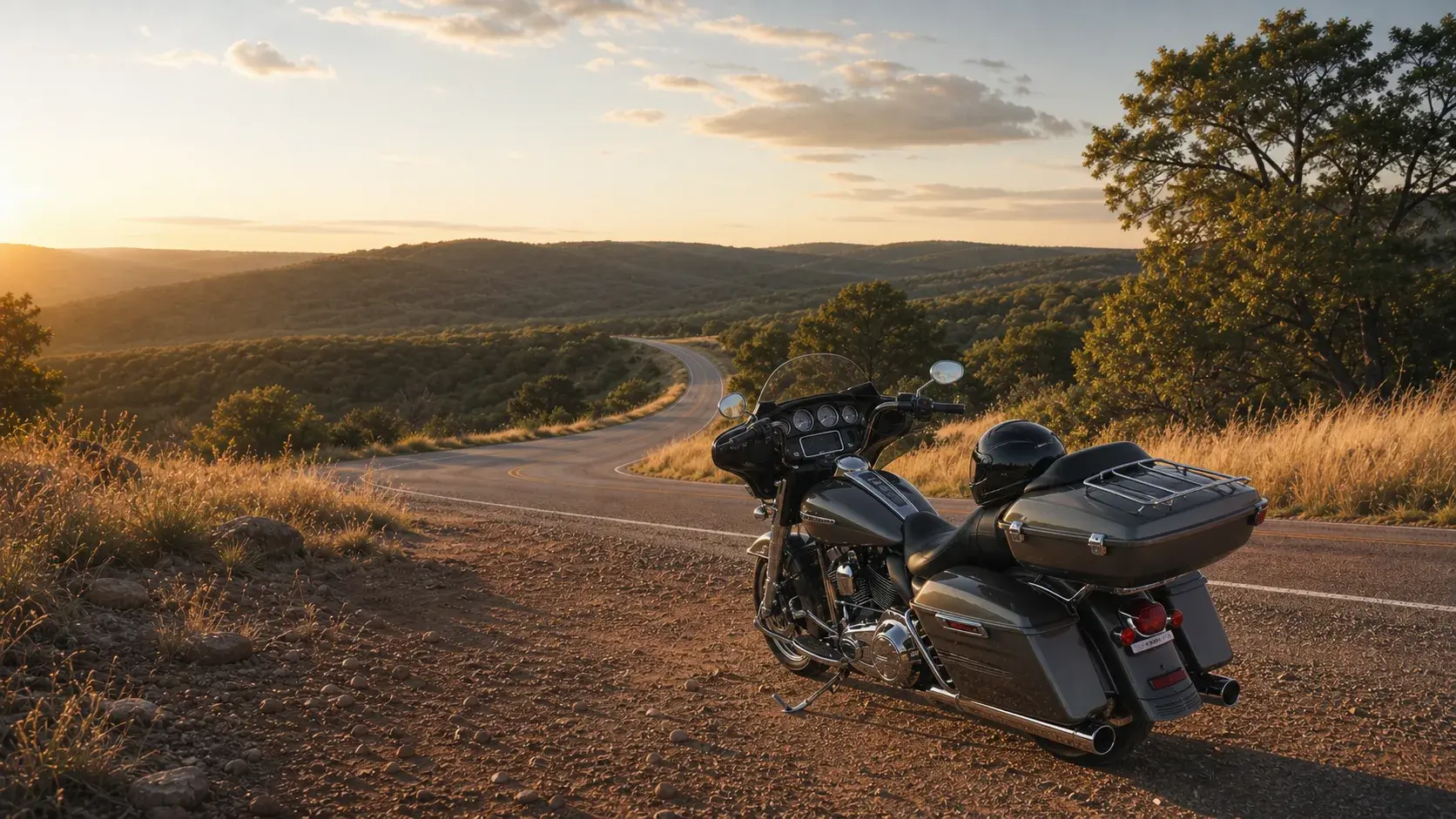
Unbranded touring motorcycle parked in a gravel Oklahoma scenic turnout beside a winding road at sunset

Oklahoma motorcycle rides

Plan an Oklahoma ride your family can retrace if something goes wrong.

Use official Oklahoma route sources to plan the ride, then keep emergency contacts, insurance papers, and post-crash proof easy for your family to find if something goes wrong.

For accepted motorcycle-injury matters, attorney fees are contingent on recovery and governed by a written engagement agreement.

Official route sources

Build the ride around current Oklahoma sources.

A route list alone is not enough. These ride links stay tied to official Oklahoma tourism resources and add the part riders and families actually need if a ride turns into a serious crash.

TravelOK - Motorcycling in Oklahoma

Oklahoma's official tourism motorcycling hub with route articles, maps, and ride-planning resources.

Open official source

Central and northeastern Oklahoma

Route 66 from Edmond to Tulsa

Route 66 is one of the Oklahoma rides people search for first. It can also mean towns, driveways, business entrances, tourists, and stop-and-go traffic mixed with open-road stretches.

TravelOK motorcycle itinerary

Before you ride

  • Plan fuel, food, and rest stops before the ride instead of improvising while tired.
  • Keep a phone mount or written route notes so a missed turn does not become a sudden lane change.
  • Save insurance cards and emergency contacts where a passenger or family member can find them.

If a crash happens

  • Write down the town, cross street, nearby business, mile marker, or landmark as soon as possible.
  • Look for storefront, dashcam, traffic, and parking-lot cameras before routine overwrite periods pass.
  • Preserve the motorcycle, helmet, jacket, gloves, boots, and any luggage or mounted electronics.

Southeastern Oklahoma

Talimena National Scenic Byway

The Talimena route is known for scenery, elevation changes, overlooks, curves, and changing weather. A beautiful road can still demand a serious plan.

TravelOK Talimena Scenic Byway guide

Before you ride

  • Check weather, daylight, and fuel before riding into rural stretches.
  • Tell someone the route and expected return time, especially if riding alone.
  • Keep medical information, emergency contact, and insurance details somewhere reachable.

If a crash happens

  • Capture the closest overlook, roadway marker, curve, grade, shoulder condition, and direction of travel.
  • Document weather, fog, glare, leaves, gravel, wildlife, or road-surface issues while they are still visible.
  • Save EMS, law-enforcement, tow, and hospital-transfer information in one folder.

Green Country and eastern Oklahoma

Eastern Oklahoma motorcycle rides

Eastern Oklahoma routes can mix lake roads, hills, small towns, bridges, rural intersections, and weekend traffic.

TravelOK eastern Oklahoma motorcycle rides

Before you ride

  • Check road construction, lake-event traffic, and weather before leaving.
  • Carry a small proof kit: phone battery, insurance card, emergency contact, and a way to photograph the scene.
  • Use a group-ride plan that explains stops, spacing, and what to do if someone goes down.

If a crash happens

  • Get names and numbers from other riders before the group scatters.
  • Photograph lane markings, road edge, gravel, debris, bridge approaches, and blocked sight lines.
  • Identify the responding agency and tow yard before the motorcycle is moved again.

Western Oklahoma

Western Oklahoma motorcycle rides

Western Oklahoma rides can involve longer open stretches, wind, changing visibility, farm access, rural crossroads, and fewer immediate services.

TravelOK western Oklahoma motorcycle rides

Before you ride

  • Plan fuel range, hydration, wind, heat, and cell-service gaps before leaving.
  • Share the route with someone who is not on the ride.
  • Keep insurance papers and emergency contacts somewhere that does not depend on an unlocked phone.

If a crash happens

  • Note mile markers, nearest town, county road, highway number, and direction of travel.
  • Photograph sight distance, road surface, shoulder drop-off, farm entrances, debris, and vehicle resting positions.
  • Save ambulance, air-transport, hospital, tow, and law-enforcement records from the first day.

Muskogee and surrounding eastern Oklahoma roads

Muskogee-area motorcycle rides

Muskogee-area rides can include town edges, river crossings, rural highways, recreational traffic, and mixed local or visitor traffic.

TravelOK Muskogee-area motorcycle rides Muskogee crash records and evidence

Before you ride

  • Plan the route with stops before the ride starts.
  • Keep rider and passenger contact information together if riding two-up.
  • Use a pre-ride check for tires, lights, brake function, weather, and insurance cards.

If a crash happens

  • Write down nearby businesses, homes, intersections, bridges, or landmarks that could help locate video or witnesses.
  • Keep passenger statements, rider statements, and witness names separate instead of letting one version become the only version.
  • Preserve damaged gear and passenger gear, not just the motorcycle.

Ride-ready checklist

A useful emergency plan is boring before you need it.

A rider should not need to make every decision from a hospital room, a tow yard, or the side of a rural road. Put the basics somewhere a family member can find them.

Before the ride

Share the route, expected return time, emergency contact, insurance card location, and any medical-alert information with someone who can help if you cannot speak.

  • Motorcycle and health-insurance information
  • Emergency contact and preferred hospital
  • Weather, daylight, fuel, water, and cell-service plan

During the ride

Keep the route simple enough to follow without sudden decisions. Fatigue, heat, wind, group spacing, and unfamiliar roads can all change how a ride feels.

  • Stop before fatigue turns into pressure
  • Keep group spacing and meet-up points clear
  • Avoid guessing through construction, gravel, or low-visibility areas

If something goes wrong

Medical care comes first. After that, route details can matter: mile marker, road name, direction, weather, surface, nearby cameras, witnesses, and where the bike was moved.

  • Photograph the road, motorcycle, helmet, gear, and vehicles
  • Save witness names and nearby camera locations
  • Write down police, EMS, tow, and hospital information

Crash proof on a route

Route details can answer blame before blame hardens.

After a motorcycle crash, someone may reduce the story to speed or visibility. The route, road, weather, bike, gear, witnesses, and cameras can give a fuller answer.

Road name, mile marker, cross street, nearest town, direction of travel, and lane position.
Weather, lighting, glare, wind, gravel, debris, shoulder drop-off, curve, grade, or construction.
Witness names, other riders in the group, nearby homes, businesses, dashcams, traffic cameras, or parking-lot cameras.
Helmet, jacket, gloves, boots, mounted camera, phone, luggage, saddle bags, and damaged motorcycle parts.
Police agency, report number, EMS provider, tow yard, storage paperwork, repair estimate, and insurer claim number.

Questions

Questions to answer before a ride turns urgent.

Is this a list of roads Oklahoma Motorcycle Lawyers says are safe?

No. The route links are official Oklahoma tourism resources. This page does not say any road is safe or unsafe. It helps riders connect ride planning with practical preparation, insurance papers, and what to preserve if a crash happens.

What should I keep with me before a longer Oklahoma motorcycle ride?

Keep emergency contacts, motorcycle insurance, health-insurance information, medication or medical-alert details, route notes, and a way for family to find the basics if you cannot speak for yourself.

What route details matter after a motorcycle crash?

The road name, direction of travel, mile marker, nearest town, cross street, weather, lighting, road surface, shoulder condition, witnesses, cameras, and where the motorcycle and vehicles came to rest can all matter.

Should I use the Crash command center after a ride crash?

Yes. If a serious crash already happened, choose the problem in front of you: same-day steps, insurance calls, hospital help, damaged bike and gear, or a police report that seems wrong.