1
Save video and witness details first.
Scene photos, witness names, camera locations, tow details, and damaged gear usually matter before bills or records are complete.
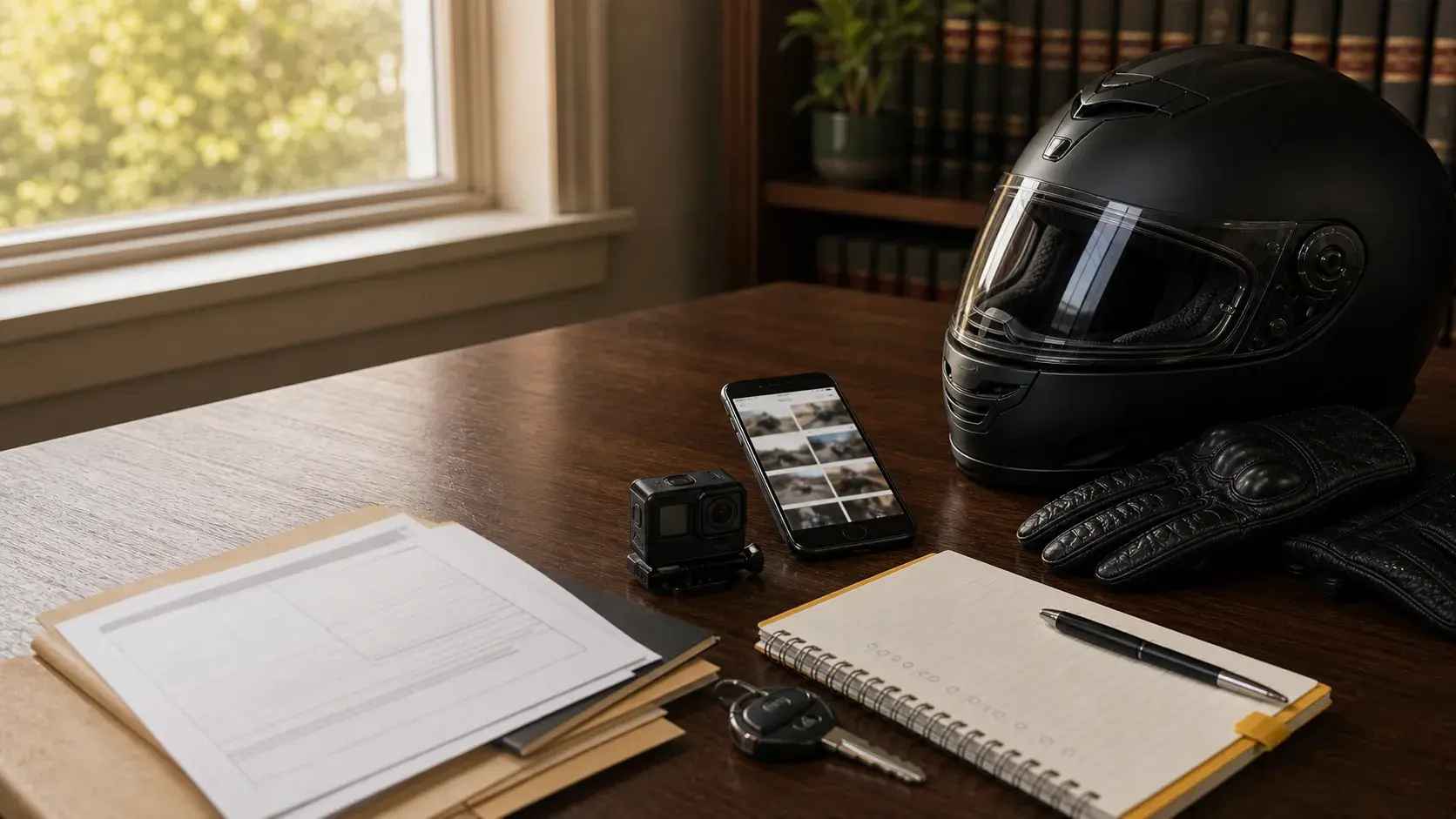
Crash evidence organizer
After a serious motorcycle crash, the facts scatter fast. This organizer gives riders and families one place to track the proof that can answer blame, insurance, injury, and value questions.
For accepted motorcycle-injury matters, attorney fees are contingent on recovery and governed by a written engagement agreement.
Why this matters
A rider may be dealing with pain, medication, tow yards, insurance calls, and family stress. This organizer gives the rider or helper one calm way to protect the facts without guessing.
Scene photos, witness names, camera locations, tow details, and damaged gear usually matter before bills or records are complete.
Write what you know, what you do not know, who knows it, and where the record might exist. Avoid guessing about speed, distance, fault, or injury severity.
Medical records, bills, restrictions, work loss, liens, and insurance letters develop over time. A simple timeline keeps the case from turning into scattered paper.
Start smaller
If twenty-four items feel like too much, begin here. Safety and medical care come first. The rest of the organizer can wait until a rider or helper has the capacity to use it.
Get emergency and follow-up medical care. Do not delay care to collect evidence.
Save the crash location, date, direction of travel, responding agency, report number, and tow information.
Preserve photos already taken and list possible witnesses or cameras. Do not return to an unsafe roadway.
Record where the motorcycle, helmet, and gear are located and who can authorize movement, repair, or release.
Keep insurer names, claim numbers, adjuster messages, and anything you are asked to record, sign, or release.
Interactive checklist
Check what you have. Leave the rest visible. If a family member is helping, this gives them a practical list while the rider focuses on treatment.
When you ask for help
Bring what you have. The organizer is here to show what may matter, not to make a hurt rider feel like they failed if a witness left or a camera was missed.
Request a case reviewEvidence questions
No. It is general Oklahoma motorcycle crash education. A real claim depends on the crash facts, injuries, insurance, venue, and available proof.
Medical care comes first. Once the rider is safe, the most time-sensitive proof is usually scene photos, witness names, nearby camera locations, police information, tow-yard details, and preserving the motorcycle, helmet, and gear.
If possible, photograph and preserve the motorcycle before repair, sale, salvage, or inspection changes it. Bike damage can help explain impact direction, force, visibility, and whether the other side's story fits the physical proof.
Yes. A family member can track police information, tow location, witnesses, insurance calls, medical providers, and documents while the rider focuses on treatment.
No. The organizer helps preserve and sort proof. It does not decide fault, coverage, injury value, or whether an attorney-client relationship exists.