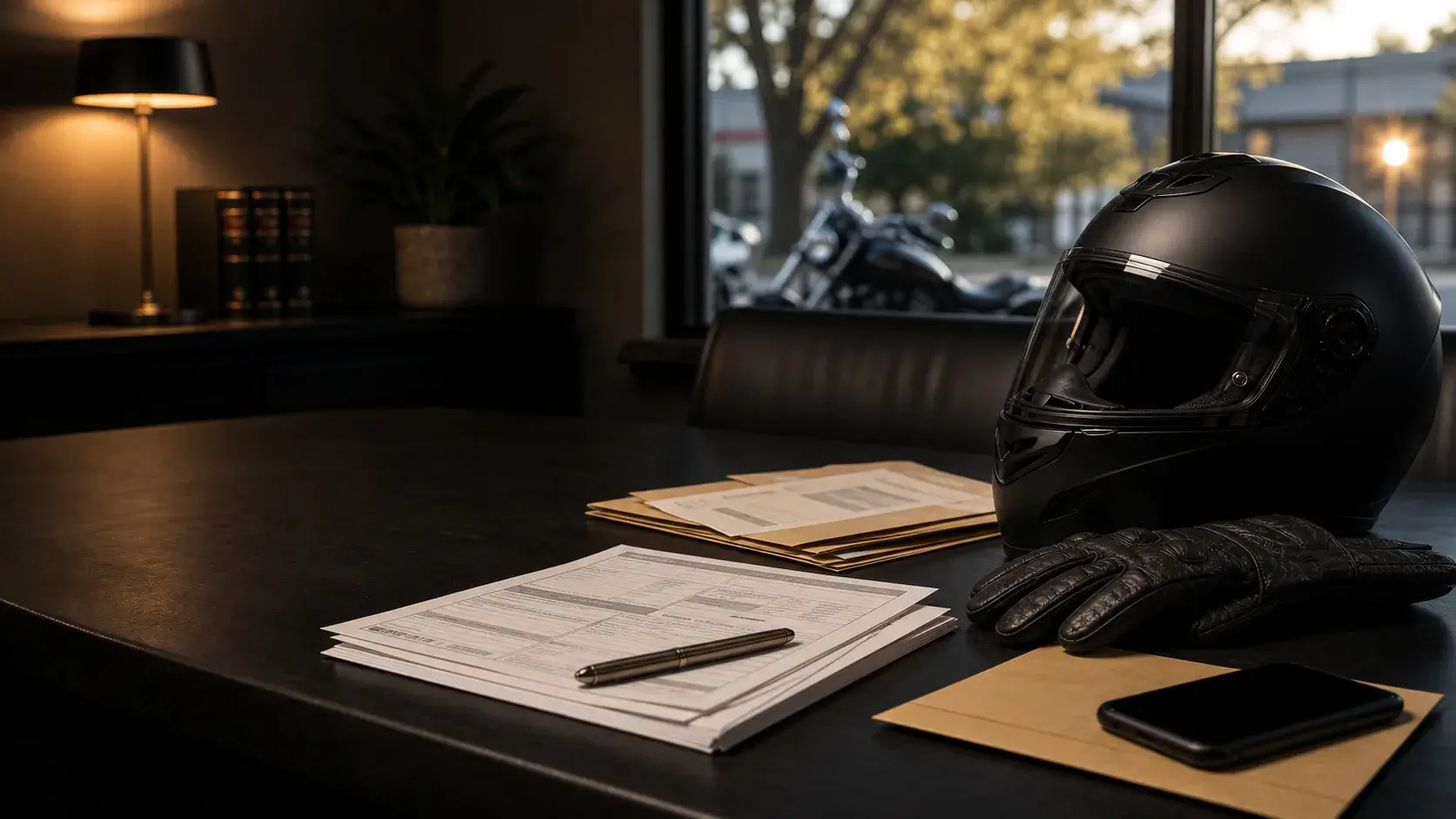
Motorcycle insurance declarations pages and riding gloves on a table with a motorcycle parked outside

When the coverage is not enough

Oklahoma motorcycle UM/UIM claims

Oklahoma motorcycle UM/UIM claim guidance for riders facing uninsured drivers, low policy limits, coverage letters, and insurance pressure.

For accepted motorcycle-injury matters, attorney fees are contingent on recovery and governed by a written engagement agreement.

Coverage and notice file

What to save for UM/UIM claims.

A UM/UIM question cannot be answered from the other driver's insurance card alone. Preserve the declarations, endorsements, selection or rejection records when relevant, notice history, household policies, and the facts showing why liability coverage may be missing or insufficient.

Motorcycle declarations page and the full policy if available

Household auto declarations pages for every vehicle in the household

Umbrella, excess, med-pay, health-insurance, disability, and lien documents

All insurer letters, limits disclosures, denials, reservations of rights, and claim numbers

Crash proof, medical records, wage loss, and injury documentation tied to coverage questions

Official process and practical proof

Build the coverage file before a limits settlement changes it.

The Oklahoma Insurance Department explains that insurers must offer UM coverage; a named insured or applicant may reject it or select lower limits in writing. Ordinary UM/UIM addresses bodily-injury loss rather than motorcycle repair. The issued policy, endorsements, insured status, crash facts, notice history, and Oklahoma law still control the actual answer.

Step 1

Start with the issued contract, not the insurance card

Collect the declarations page, complete policy, endorsements, renewals, and any UM selection or rejection form that can be located. Identify the named insureds, covered vehicles, effective dates, limits, and later amendments without treating the declarations page as the entire contract or deciding coverage from one label.

Step 2

Prove why liability coverage may be missing or too small

Keep the other driver's limits disclosure, denial or coverage letter, hit-and-run facts when applicable, claim number, and crash proof. Compare that file with the rider's documented injuries and losses. A low limit, missing driver, or disputed policy is a coverage question; it does not replace proof of responsibility and damages.

Step 3

Preserve every notice and insurer response

Keep the date, method, address, and delivery proof for each notice. Save claim acknowledgments, requests for statements or authorizations, reservation-of-rights letters, denials, written explanations, and responses. Ask what policy provision or factual issue supports a request rather than ignoring it or supplying more private information than the request requires.

Step 4

Stop before a liability-limits settlement or release

When a tentative liability-limits agreement is reached with an insured tortfeasor, Oklahoma Title 36 Section 3636 describes a certified-mail notice and possible sixty-day substitution process. It specifies notice materials. Do not reconstruct that statutory process from a web summary or sign a release before case-specific review of the policy, notice, timing, settlement papers, and claim posture.

Questions that matter in UM/UIM claims.

Do not stop at one policy

Serious motorcycle injuries can exceed one driver's limits quickly. The coverage review should include the motorcycle policy, household policies, and any excess or umbrella coverage.

Separate coverage from fault

Coverage questions do not replace crash investigation. Fault, injuries, damages, liens, and policy language all need their own paper trail.

Watch early releases

A quick property-damage or low-limits settlement may come before the full coverage picture is understood. Releases should be read carefully.

Coverage questions after UM/UIM claims.

List every potentially relevant motorcycle, auto, household, employer, and umbrella policy before deciding what applies. Coverage depends on policy language, insured status, vehicle use, notice, exclusions, and Oklahoma law—not the label on a claim file.

  • The at-fault driver's bodily-injury liability coverage
  • The rider's uninsured or underinsured motorist coverage
  • Household policies that may or may not apply depending on the facts and policy language
  • Medical payments, health insurance, liens, disability, and umbrella coverage
Review coverage issues

Questions

Questions about UM/UIM claims.

These answers are general information. A real claim depends on the crash facts, injuries, insurance, venue, deadlines, and available proof.

What does UM/UIM mean in a motorcycle crash?

UM generally refers to uninsured motorist coverage. UIM generally refers to underinsured motorist coverage. Whether either applies depends on the policies and facts.

What documents should I gather for a coverage review?

Gather the motorcycle declarations page, household auto declarations pages, umbrella policies, health-insurance papers, insurer letters, claim numbers, and any denial or limits letters.

Can my own insurer be involved even if another driver caused the crash?

Yes, depending on the policies and facts. Your own coverage may matter if the other driver has no insurance, too little insurance, or a disputed policy.

Does UM/UIM pay to repair the motorcycle?

The Oklahoma Insurance Department says ordinary UM/UIM does not repair or replace the vehicle. A motorcycle-property claim may instead involve the responsible driver's coverage or separate property coverage actually shown by the policy. Keep property papers and injury releases separate until both are understood.

Next steps

Identify the coverage found so far.

Share every policy and declaration page you have, the at-fault driver's known limits or missing-driver facts, notices already sent, denial or reservation letters, household information, and any recorded-statement request.

For accepted motorcycle-injury matters, attorney fees are contingent on recovery and governed by a written engagement agreement.

Request a case review