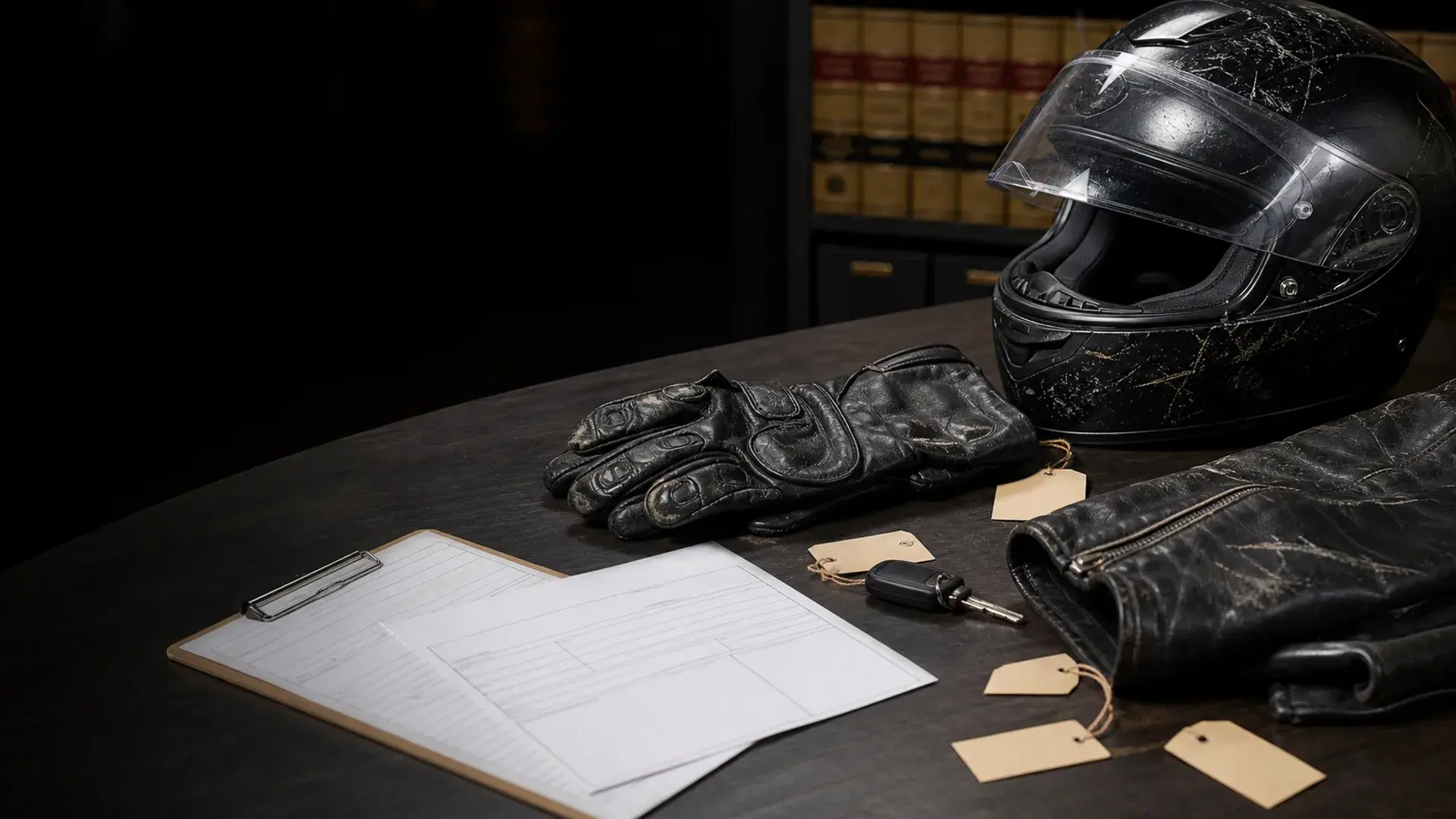
Damaged helmet, gloves, jacket, keys, tow paperwork, and repair notes preserved on an evidence table

Motorcycle and gear proof

What to do when the bike and gear are damaged

The motorcycle and gear are not just property. Their condition may help a qualified investigator or expert evaluate contact points, impact direction, road contact, visibility, and whether an account fits the physical evidence. They do not establish speed, force, fault, medical causation, or case value by themselves.

Work the task in front of you. A case-review request is a separate next step.

Step 1

Keep the motorcycle as-is until it is documented

Before repairs, sale, salvage, or cleanup, photograph the motorcycle from every side, including impact points, broken parts, lights, tires, mirrors, controls, odometer, VIN, bags, and aftermarket equipment.

Step 2

Preserve the helmet and gear

Keep the helmet, face shield, eyewear, jacket, pants, boots, gloves, camera, phone mount, and luggage. Do not wash, repair, discard, or alter damaged items before they are documented.

Step 3

Track tow and storage information

Write down the tow company, storage location, release requirements, fees discussed, and who is allowed to move the motorcycle. Ask for invoices and photos before the bike changes hands.

Step 4

Save repair and total-loss paperwork

Keep estimates, supplement requests, total-loss valuations, title paperwork, parts lists, receipts, photos, and every message from the insurer or repair shop.

Step 5

Use the deeper toolkit

The bike and gear damage toolkit has a fuller photo checklist, document list, tow-yard warning, and insurance-call language for the property side of the crash.

Keep the bike and gear from disappearing.

  • Do not throw away damaged gear because it looks unusable.
  • Do not let the motorcycle move from a tow yard or shop without knowing where it is going.
  • Do not accept a property-damage payment as final unless you understand what it releases.
  • Do not assume cosmetic damage is the only proof the bike can provide.

What helps us understand the property proof.

  • Where the motorcycle is stored and who has possession.
  • Photos of the motorcycle, gear, odometer, VIN, and impact points.
  • Tow invoices, storage notices, estimates, and total-loss paperwork.
  • Helmet-camera, phone, or bike-camera information.
  • Any property-damage payment or release sent by insurance.
Request a case review

Questions

Answers about the motorcycle and gear.

These answers are general information. A real claim depends on the crash facts, injuries, insurance, venue, and available proof.

Should I repair the motorcycle before talking to a lawyer?

If possible, document the motorcycle and damaged parts first. Repairs can remove physical evidence that may matter to the injury claim.

Do you handle property damage by itself?

This page does not establish which matters or property-only tasks the lawyers will accept. Bike and gear information is included because its condition can matter to evidence preservation, insurance paperwork, and case-specific analysis.

Case-specific next step

If this question now turns on your crash facts, request a focused review.

Begin with a way to reach you, the names of known people, businesses, or insurers involved, and the crash basics you know. The short summary is optional. Rider First's stated legal-service scope is Oklahoma motorcycle injury matters. Submission does not promise review, response, acceptance, or representation and does not extend a deadline.

Request an Oklahoma case review