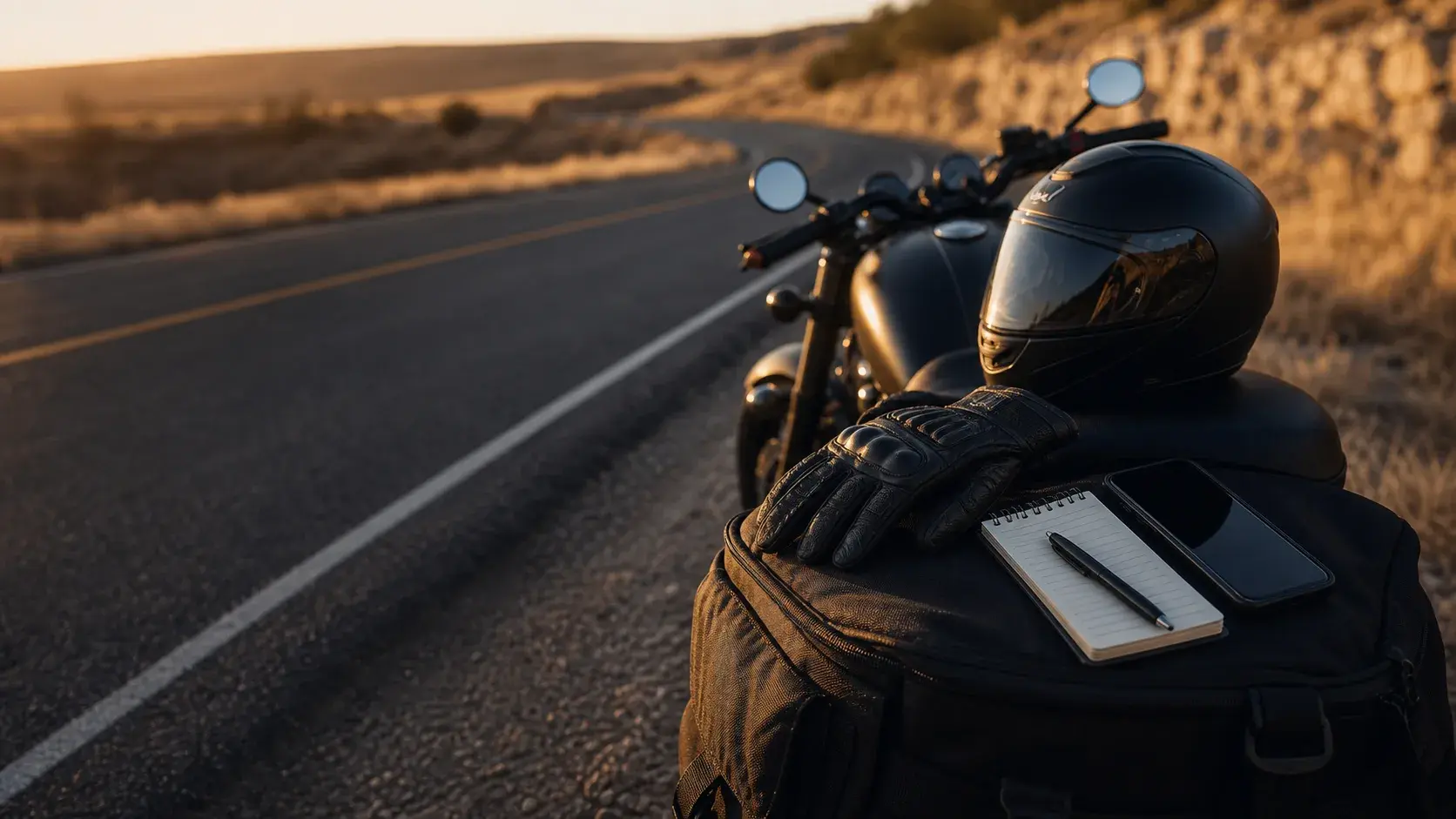
Motorcycle helmet, gloves, phone, and small notebook arranged safely beside an Oklahoma roadside turnout

Crash checklist

Oklahoma rider crash kit

A practical checklist for Oklahoma riders and families who need to protect their health, their bike, and the facts after a serious crash.

For accepted motorcycle-injury matters, attorney fees are contingent on recovery and governed by a written engagement agreement.

Step 1

First minutes after the crash

If you can do it safely, call 911, accept medical care, photograph the vehicles, final resting positions, skid marks, traffic controls, road surface, debris, and visible injuries, and get names and numbers for witnesses.

  • Write down the police agency, report number, ambulance provider, and tow yard.
  • Photograph the scene from both travel directions before vehicles move if it is safe.
  • Ask a passenger, family member, or friend to collect witness names if you cannot.

Step 2

Protect the motorcycle and gear

Do not repair, sell, clean, or throw away the motorcycle, helmet, jacket, boots, gloves, camera, phone, or other gear. Their condition may help a qualified investigator or expert evaluate contact points, impact direction, visibility, and possible injury mechanisms; the items do not establish speed, force, fault, medical causation, or case value by themselves.

  • Keep the helmet, visor, camera, jacket, gloves, boots, pants, and damaged electronics.
  • Tell the tow yard not to dispose of the motorcycle or release it without notice.
  • Take close photos before anything is washed, repaired, moved, or inspected by insurance.

Step 3

Keep the insurance and medical record clean

If a recorded statement is requested, write down who contacted you, whom they represent, the claim number, the policy or claim involved, and what they asked. Your own policy may create duties that differ from another driver's insurer.

Save the request and seek case-specific advice promptly before refusing or answering while hurt or unsure. Keep a running list of treatment, diagnoses, missed work, bills, liens, and symptoms that change over time.

  • Save letters, texts, emails, adjuster names, claim numbers, and requested releases.
  • Track every provider, appointment, diagnosis, restriction, bill, and missed-work day.
  • Do not guess about speed, distance, fault, future care, or full injuries during an early call.

Step 4

Turn the first notes into a source map

Make one private index while names, locations, and document labels are still fresh. Separate what you personally observed from what a witness, report, photograph, recording, or message says. For every item, note who supplied or holds it, the date received, the original filename or document label, and where an untouched copy is kept.

A collision report, a DPS or OHP record, and OHP video or 911 audio may use different request paths. Use the records guide for the current route. Begin identifying lawful private video sources and preserving the motorcycle and gear before an official record arrives.

  • List each responding agency, report or citation number, tow location, and private camera lead separately.
  • Keep an untouched original and use a separate copy for viewing, marking, clipping, or sharing.
  • Keep medical details, policy files, identity documents, passwords, and private access credentials out of public posts and the first website message.

Keep these details together.

  • Police report number, 911 information, tow-yard paperwork, and ambulance provider
  • Photos, witness names, camera locations, scene landmarks, and road-condition proof
  • Helmet, gear, motorcycle, phone, camera, and any damaged accessories
  • Insurance letters, claim numbers, medical bills, work notes, and symptom changes

Your browser opens its own print options. Rider First does not receive or store the copy you print or save.

Keep urgent pressure from erasing evidence.

  • Throwing away the helmet or gear because it feels ruined
  • Repairing or selling the motorcycle before it is documented
  • Guessing during an insurance call—or assuming a recorded-statement request can simply be ignored
  • Signing a property or injury release before the paperwork is understood

Questions

Answers for the first days after a crash.

These answers are general information. A real claim depends on the crash facts, injuries, insurance, venue, deadlines, and available proof.

What is the first thing to do after an Oklahoma motorcycle crash?

Get medical care and make sure the scene is safe. After that, preserve photos, witness information, police details, the motorcycle, helmet, gear, and insurance messages.

Should I keep damaged motorcycle gear?

Yes. Keep the helmet, visor, jacket, gloves, boots, pants, camera, phone, and motorcycle. Their condition may help a qualified reviewer evaluate contact points, impact direction, visibility, and possible injury mechanisms, but the items do not prove speed, force, fault, medical causation, or case value by themselves.

Can a family member use this checklist?

Yes. A family member can collect police information, tow-yard details, photos, witness names, insurance letters, and medical-provider information while the rider focuses on treatment.

Case-specific next step

If this question now turns on your crash facts, request a focused review.

Begin with a way to reach you, the names of known people, businesses, or insurers involved, and the crash basics you know. The short summary is optional. Rider First's stated legal-service scope is Oklahoma motorcycle injury matters. Submission does not promise review, response, acceptance, or representation and does not extend a deadline.

Request an Oklahoma case review