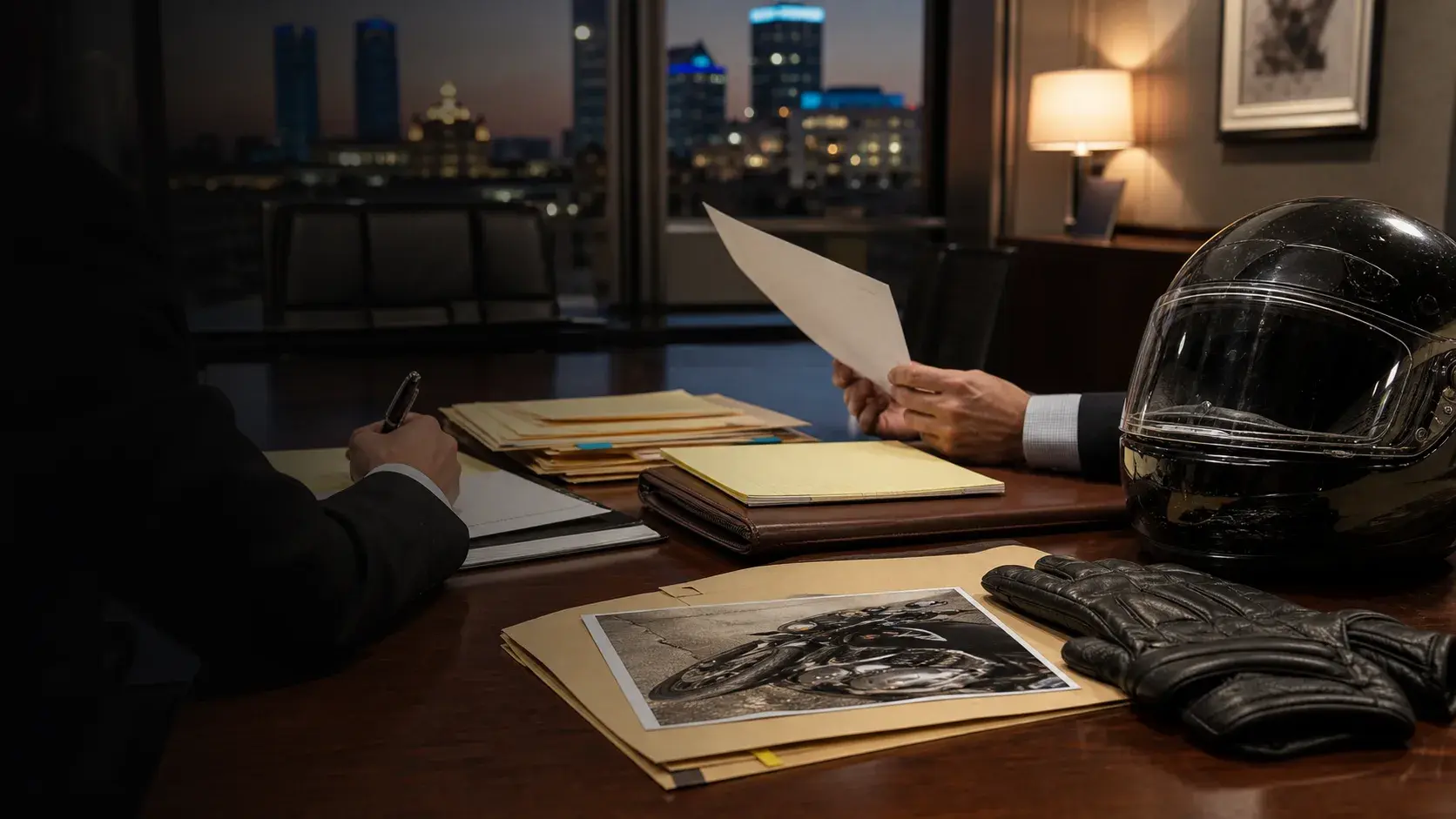

Oklahoma law office conference table with motorcycle helmet, case files, and city light through the window

Jason Hicks

Jason Hicks | Oklahoma trial lawyer

Jason Hicks is a co-owner of Oklahoma Motorcycle Lawyers and practices through Hicks Law Firm. His public profile identifies a focus on catastrophic-injury, wrongful-death, and civil-rights litigation in Oklahoma.

Jason Hicks and D. Colby Addison jointly own Rider First and are responsible counsel for its content and advertising. Both are source owners for Rider First content. Jason practices through Hicks Law Firm and Colby practices through Addison Law Firm; the firms are separate. Any accepted representation is governed by a written agreement identifying case-specific roles, scope, fees, costs, and day-to-day responsibility.

Jason Hicks portrait for Oklahoma Motorcycle Lawyers

Hicks Law Firm

Verified professional background.

A serious motorcycle case should be built around the rider's actual injuries, the physical and digital evidence, every available insurance layer, and the decisions that will matter if the claim cannot be resolved fairly. Jason's published background supports a trial-oriented review of those issues without assuming that any past firm result predicts a future outcome.

Catastrophic injury, wrongful death, and civil-rights litigation
J.D. and B.B.A., University of Oklahoma
Gerry Spence Trial Lawyers College
Admitted before the Oklahoma Supreme Court and all three Oklahoma federal districts
Oklahoma Association for Justice, American Association for Justice, and National Police Accountability Project

Profile sources reviewed July 28, 2026. Credentials and roles can change; use the linked firm profile for the current source.

How the background applies

Build the motorcycle case around evidence, not assumptions.

1

Catastrophic-injury proof must show more than a diagnosis

A life-changing motorcycle injury can affect mobility, work, sleep, family roles, transportation, future care, and independence. A useful legal review connects the medical record to those real effects while separating known facts from future-care questions that may require qualified medical or vocational analysis.

  • Preserve the first emergency, imaging, surgical, rehabilitation, and follow-up records.
  • Track work restrictions, missed income, daily limitations, and help provided by family members.
  • Identify future-care questions without turning an early estimate into a promise.
2

Wrongful-death review begins with family and evidence

A fatal motorcycle crash creates immediate family decisions while roadway, vehicle, video, phone, witness, and insurance evidence may be changing or disappearing. The first legal task is not to force a family into a case theory. It is to identify who may act, what must be preserved, and which practical or legal questions need prompt attention.

  • Keep police, medical-examiner, funeral, employment, insurance, and family-loss records organized.
  • Preserve the motorcycle, helmet, gear, electronics, photographs, and available camera sources.
  • Confirm the responsible lawyer and engagement terms in writing before relying on representation.
3

Trial preparation should begin before a lawsuit

Trial readiness is not a slogan and does not require filing every claim. It means testing the driver's account against the scene, damage, witnesses, cameras, medical chronology, insurance documents, and applicable law before evidence gaps harden into assumptions.

  • Separate what each witness actually observed from later conclusions about speed or fault.
  • Map liability, UM/UIM, health coverage, liens, and release language before treating the claim as one policy.
  • Document the limits of the available proof as carefully as the favorable facts.
4

Civil-rights work reinforces source discipline

Civil-rights litigation and motorcycle injury litigation are different fields. The useful overlap is disciplined work with records, video, competing official narratives, witness credibility, causation, and damages. That background does not decide a motorcycle claim; it supports an evidence-first method for evaluating one.

Questions before engagement

Know who would handle the work.

A biography helps establish background. It does not replace a direct conversation about responsibility, communication, evidence, fees, costs, conflicts, deadlines, or the written engagement agreement.

How would the written agreement assign Jason's personal participation, case-specific responsibility, and day-to-day communication?

What evidence should be protected before the motorcycle, helmet, gear, vehicle, or video changes?

Which insurance policies, liens, releases, and coverage questions need review?

What important facts are still unknown, and what is the plan for finding them?

Published source and limits

Read the source, then ask what it proves.

This is the lawyer's current biography published by the separate firm. It supports the identified professional background but does not promise personal handling, establish a result in another matter, or change the written agreement required to begin representation.

Meet the full Rider First team.

Oklahoma Motorcycle Lawyers is jointly owned by Jason Hicks and D. Colby Addison. Review both backgrounds and ask how a written agreement would assign case-specific roles, personal participation, and day-to-day responsibility.

Read D. Colby Addison's profile

Ask whether we can help.

Begin with a contact method and the names of known people, businesses, or insurers involved. Add the structured crash basics you know; the short summary is optional. Submitting information does not create an attorney-client relationship or extend a deadline.

Request a case review and ask about responsibility

Ask how case-specific responsibility would be assigned, what evidence needs protection, and what remains unknown.