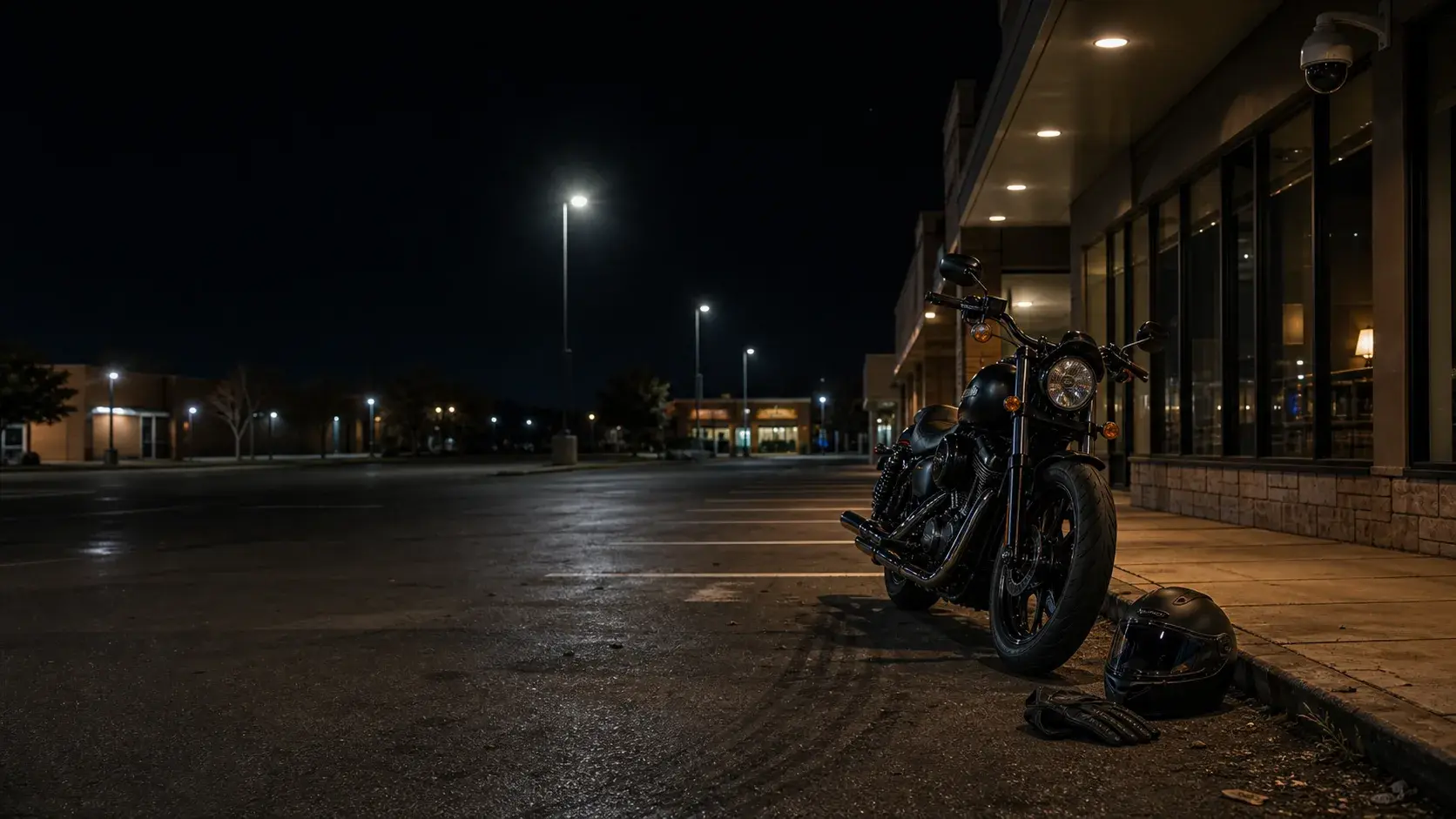
Dim Oklahoma street with a parked motorcycle, streetlights, and nearby storefront cameras after dark

When the driver leaves

Oklahoma hit-and-run motorcycle crashes

Oklahoma hit-and-run motorcycle crash guidance for riders and families dealing with missing drivers, video searches, police follow-up, and UM coverage.

For accepted motorcycle-injury matters, attorney fees are contingent on recovery and governed by a written engagement agreement.

The departing vehicle trail

What to save for hit-and-run crashes.

A hit-and-run investigation begins with the route the vehicle took, not just the impact point. Small details—direction, lights, sound, missing parts, a partial plate, or the next camera down the road—can connect otherwise isolated evidence.

Vehicle color, body style, direction of travel, damage, sounds, lights, and partial plate details

Nearby cameras from businesses, homes, buses, traffic systems, parking lots, and dashcams

Vehicle debris, paint transfer, broken mirrors, lenses, trim pieces, and road markings

Witness names, social posts, neighborhood posts, and police incident numbers

Your own motorcycle, helmet, gear, phone, camera, and insurance documents

Official process and practical proof

Protect the vehicle trail, police follow-up, and policy notice.

Oklahoma Title 47 contains duties to stop, remain, provide information and reasonable assistance, report qualifying crashes, and consequences tied to leaving a crash. Sections 10-102, 10-102.1, 10-104, and 10-107 must be applied to the actual facts; this page does not decide a criminal charge or civil fault.

Step 1

Write the vehicle trail before memory fades

Record the time, direction, route, partial plate, color, body style, lights, sound, visible damage, missing parts, occupants, and the last place the vehicle was seen. Ask each witness where they were and what portion of the approach or departure they observed.

Step 2

Preserve debris and camera provenance

Photograph debris, paint transfer, broken mirrors, lenses, trim, skid or scrape marks, and motorcycle damage before movement or cleaning when safely possible. Build a route-based camera list and keep original files, download messages, and notes showing who supplied each item.

Step 3

Give police specific supplemental facts

Keep the incident number and responding agency. Ask how to provide later vehicle details, witness information, debris photographs, or lawfully obtained video, and how to request any releasable report, supplement, 911, dispatch, or responding-unit media that may exist. Do not assume every category was created or is public.

Step 4

Give required policy notice without assuming coverage

The Oklahoma Insurance Department says UM/UIM coverage is optional but must be offered, and that it may apply to a hit-and-run when the driver cannot be found. OID also states UM/UIM does not pay to repair the vehicle. Policy language, notice, facts, exclusions, and other coverage questions govern, so keep proof of notice, the full policy, declarations, insurer requests, and every response.

Questions that matter in hit-and-run crashes.

Find the vehicle trail

The search starts with direction of travel, vehicle description, debris, nearby cameras, witness routes, and any businesses or homes the vehicle passed after the crash.

Protect uninsured motorist coverage

If the driver is not found, the rider's own uninsured motorist coverage may become important. Policy language and notice issues should be checked early.

Keep the story factual

When details are incomplete, do not fill gaps with guesses. Write down what is known, what is uncertain, and where proof may exist.

Coverage questions after hit-and-run crashes.

If the driver is not identified, uninsured-motorist coverage may become central, but policy language and notice still control. Preserve the full policy and proof of notice; do not treat UM/UIM as vehicle-repair coverage without verifying the contract.

  • Uninsured motorist coverage on the motorcycle policy
  • Household auto policies that may need review for UM/UIM issues
  • Medical-payment coverage, health insurance, disability coverage, and liens
  • Property-damage paperwork kept separate from injury releases
Review coverage issues

Questions

Questions about hit-and-run crashes.

These answers are general information. A real claim depends on the crash facts, injuries, insurance, venue, deadlines, and available proof.

Can I still have a claim if the driver left?

Possibly. Video, witnesses, debris, police follow-up, and uninsured motorist coverage may still matter. The answer depends on the facts and policies.

What should I do first after a hit-and-run motorcycle crash?

Get medical care, call police, preserve the motorcycle and gear, write down the vehicle description and direction of travel, and identify nearby cameras before routine overwrite removes potentially useful footage.

Should I notify my own insurance?

Give your insurer the notice the policy requires and keep proof of that notice. If it requests a recorded statement, ask what policy provision applies, save the request, and obtain case-specific advice before refusing or answering while hurt or unsure.

Next steps

List what is known about the vehicle that left.

Share what was seen or heard, the vehicle's route, any partial plate or debris, witness and camera locations, the incident number, policy notices, and whether the motorcycle remains available.

For accepted motorcycle-injury matters, attorney fees are contingent on recovery and governed by a written engagement agreement.

Request a case review