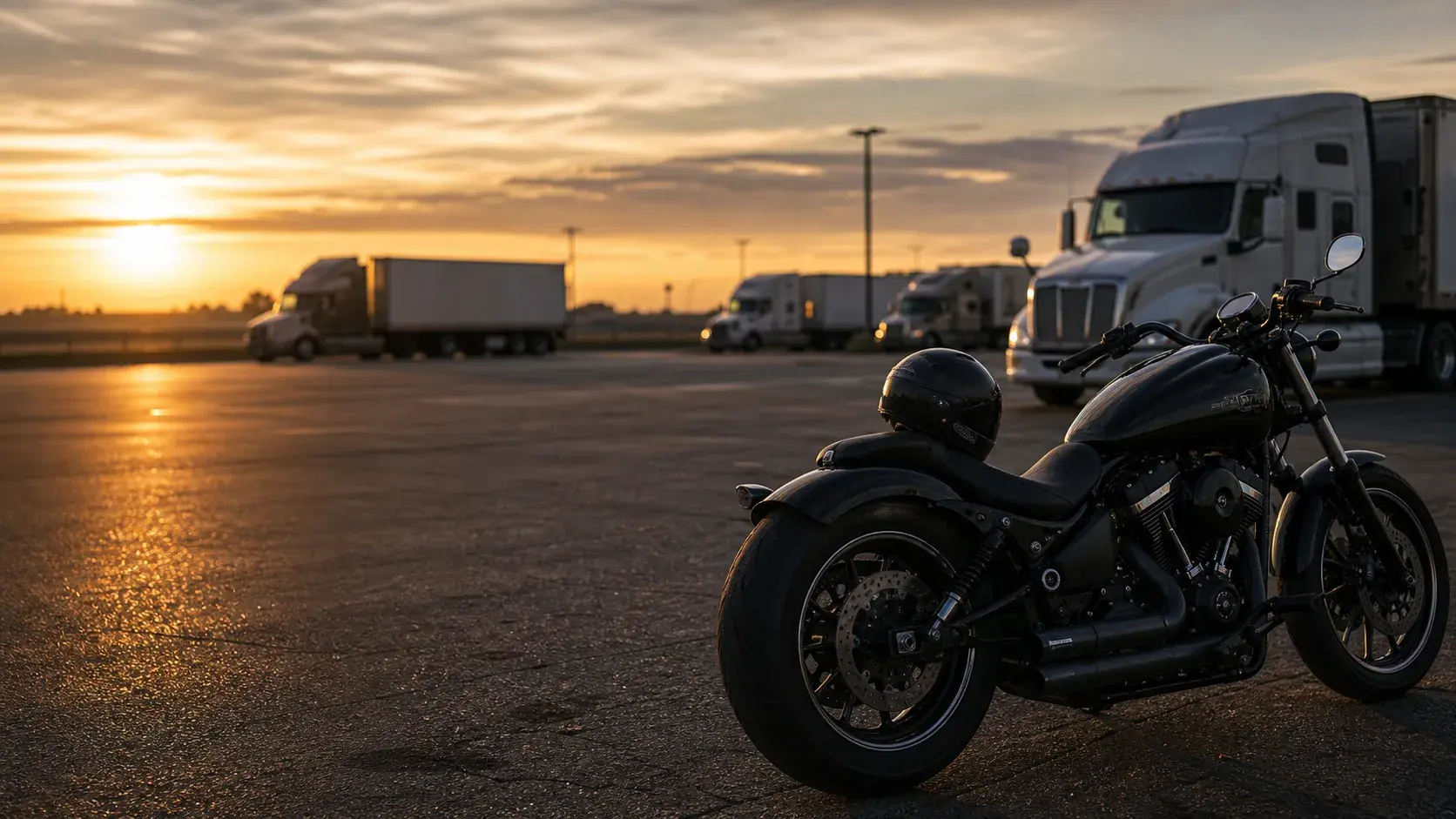
Oklahoma highway rest area with a motorcycle parked safely near distant commercial trucks

Commercial vehicles and severe injuries

Oklahoma motorcycle versus truck crashes

Oklahoma motorcycle versus truck crash guidance for riders hit by commercial vehicles, with evidence preservation, company records, and coverage issues.

For accepted motorcycle-injury matters, attorney fees are contingent on recovery and governed by a written engagement agreement.

Vehicle and carrier records

What to save for motorcycle versus truck crashes.

A commercial-vehicle crash leaves records outside the police file. Identify the truck, carrier, unit, trailer, driver, route, visible cameras, and electronic systems so preservation can be directed to real custodians before ordinary retention cycles erase useful data.

Company name, USDOT number, unit number, trailer number, plate, and insurance information

Driver logs, dispatch, route, delivery, maintenance, inspection, and training records

Dashcam, fleet camera, electronic data, telematics, GPS, phone, and event-recorder data

Photos of mirrors or cameras, lane position, damage, debris, final resting positions, and road layout

Witnesses, police materials, 911 audio, bodycam, dashcam, EMS, tow, and hospital records

Official process and practical proof

Match the truck, carrier, and records before ordinary systems change.

A company name on a cab, a USDOT number, a trailer marking, and an insurance card may point to different entities. The job is to preserve safe identifiers, use public records as leads, match each official request to the responding agency, and identify the actual custodian of each private record. A database entry or company label does not prove fault, employment, ownership, control, or responsibility for the crash.

Step 1

Record safe identifiers

From a safe location or existing photographs, preserve the legal or trade name, USDOT or MC number, cab and trailer unit numbers, plates, driver name if already available, visible insurance information, markings, camera locations, lane position, and damage. Avoid entering traffic, approaching an unsafe vehicle, confronting a driver, or delaying medical care to collect an identifier.

Step 2

Use public carrier data as an identity lead

FMCSA says its public Company Snapshot can be searched by company name, USDOT number, or MC number and can show identification, size, cargo, inspection, out-of-service, crash, and safety-rating information when available. Treat the result as a lead to preserve with its access date. FMCSA's own snapshot language says reported crashes reflect involvement rather than a determination of responsibility.

Step 3

Match official crash records to the responding agency

Keep the responding agency, crash date, county, location, involved names, trooper or officer information, and report number. Oklahoma DPS routes collision reports through Service Oklahoma and uses separate paths for OHP dash or body camera and dispatch or 911 audio. A local, county, tribal, or other agency may use a different records process, and no page should imply that every record exists or is publicly available.

Step 4

Name the real custodian before asking for preservation

Map only entities connected by facts: driver, motor carrier, employer, cab or trailer owner, maintenance or dispatch operation, camera or telematics provider, tow yard, and insurer. Then determine who may control logs, routes, inspections, training, cameras, GPS, telematics, or event data. Including a broker, shipper, affiliate, or vendor without a factual connection is improper and requires case-specific legal review.

Questions that matter in motorcycle versus truck crashes.

Preserve company records

A truck crash investigation should not stop with the police report. Company records can answer fatigue, maintenance, route, training, dispatch, and safety questions.

Visibility zones and lane changes

A generalized blind-spot explanation should be tested against mirror and camera coverage, lane position, traffic movement, damage angles, and what the driver did before changing lanes.

Coverage can be layered

Commercial cases can involve multiple companies and policies. Identifying the correct parties and coverage early matters.

Coverage questions after motorcycle versus truck crashes.

The driver, carrier, employer, owner, trailer company, or maintenance provider may have different roles and policies. A broker or shipper is not responsible by label alone; its actual control and conduct must be established before treating it as part of the claim.

  • Commercial vehicle liability coverage
  • Employer, motor carrier, trailer owner, or maintenance coverage depending on facts; broker or shipper involvement requires a fact-specific legal basis
  • The rider's UM/UIM coverage if limits or responsibility are disputed
  • Health insurance, liens, wage loss, and property-damage paperwork
Review coverage issues

Questions

Questions about motorcycle versus truck crashes.

These answers are general information. A real claim depends on the crash facts, injuries, insurance, venue, deadlines, and available proof.

What records matter after a motorcycle versus truck crash?

Driver logs, dispatch records, maintenance records, inspection reports, training materials, camera footage, electronic data, GPS, phone records, and company policies may matter depending on the facts.

Should I photograph the truck?

If it is safe, photograph the company name, USDOT number, trailer number, unit number, plate, damage, lane position, and any visible cameras or markings.

Can more than one company be involved?

Yes. Depending on the facts, a driver, motor carrier, employer, trailer owner, maintenance company, or another entity may need review. A broker or shipper should not be included by reflex; its role depends on the evidence and governing law.

Next steps

List the truck or company details you have.

Share the company and unit details, USDOT and trailer numbers, road and lane movement, visible cameras, responding agencies, tow location, known witnesses, and every carrier or insurer communication.

For accepted motorcycle-injury matters, attorney fees are contingent on recovery and governed by a written engagement agreement.

Request a case review