Roads and approaches
I-40I-240Sooner RoadRoute 66 approaches
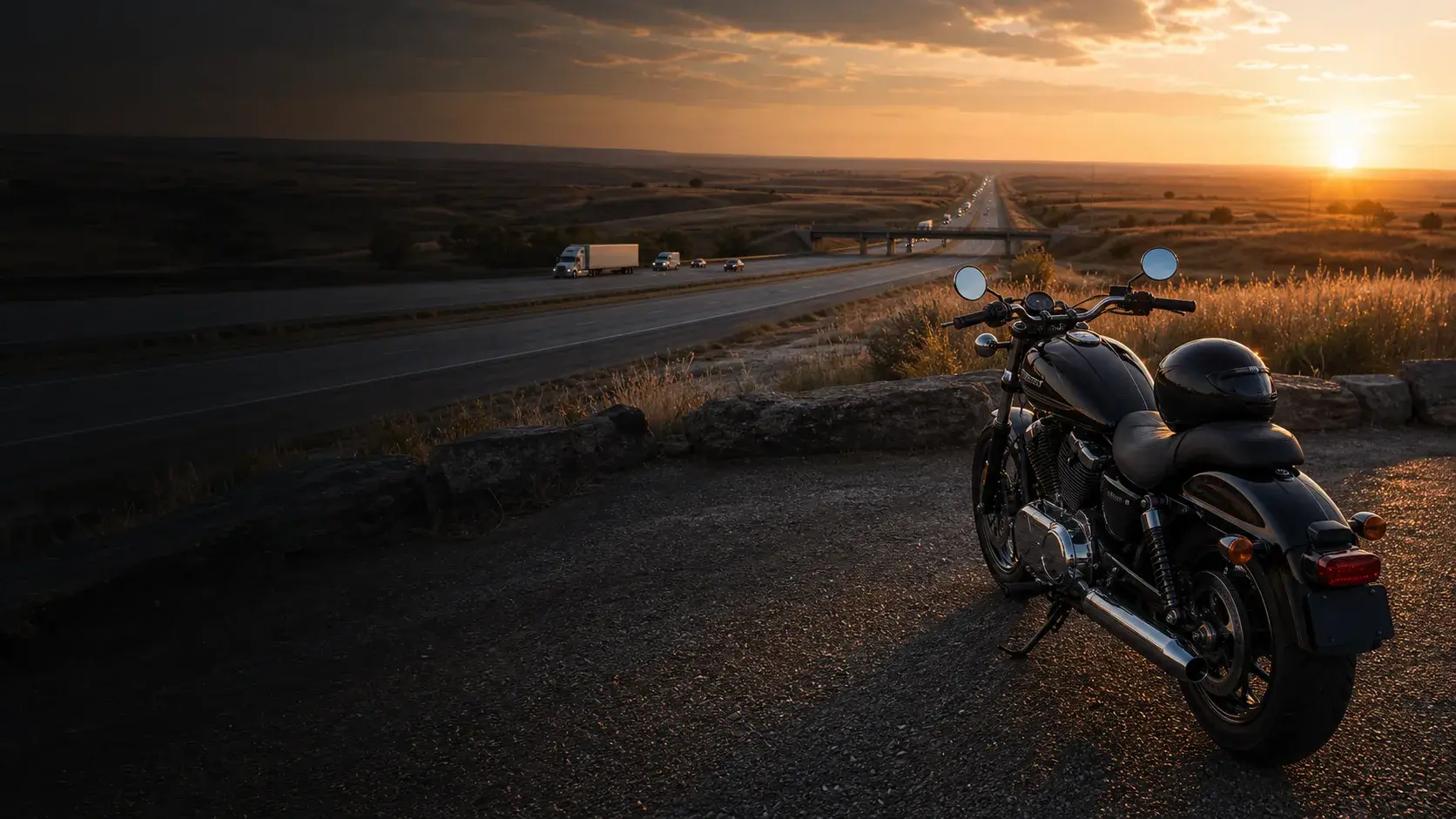
Traffic sequence, vehicle identity, and source
After an I-40 motorcycle crash, reconstruct the traffic sequence before a carrier search, roadway page, report, or early property conversation becomes the whole story.
Sequence, identity, custody, and coverage
An I-40 label does not show which vehicle moved first, which lane or ramp mattered, whether a truck marking identifies the operating carrier, who responded, what a live traffic tool retained, or what an insurance document covers. Build those as separate, source-dated questions.
OHSO 2021 Crash Facts reported many Oklahoma motorcyclists in crashes on city streets and interstate highways. This page uses that source for road-class context; it does not publish corridor-specific crash totals.
Source: Oklahoma Highway Safety Office, 2021 Highway Safety Crash Facts Book, Section 5 (Motorcyclists in Crashes). Data year 2021; source availability checked August 28, 2026.
Investigation themes
The recurring I-40 proof problem is compression: a complicated lane sequence is reduced to a speed accusation, one truck marking is treated as the complete company answer, or a property conversation is mistaken for the entire claim. Preserve the sources before accepting any of those shortcuts.
Record the lane and ramp positions, direction, order of movements, contact points, braking or debris observations, final positions, witness vantage, and source for each detail. Preserve conflicts and avoid turning an estimate into a measurement.
Keep safe original images of names, logos, USDOT or MC numbers, unit and trailer numbers, plates, placards, and distinctive damage. Search an exact identifier only as a lead and retain the query, date, result, and no-match result without treating the database as the complete crash file.
Preserve estimates, total-loss or salvage papers, checks, releases, recorded-statement requests, reservation or coverage letters, and medical/benefit communications as separate documents. Ask what each document addresses before it drives another decision.
Official source routing
Current ODOT, Service Oklahoma, DPS/OHP, FMCSA/SAFER, and Oklahoma Insurance Department pages can identify present maps, live tools, record categories, company-search fields, or consumer guidance. They prove neither the crash sequence nor driver, employer, control, road holder, record existence, camera retention, fault, coverage, deadline protection, or representation.
Step 1
From material already available, record direction, nearest exit/ramp/marker, date/time, lanes, each movement in order, contact points, final positions, responder, report number, EMS, tow destination, and source for each detail. Preserve originals, metadata, estimates, and conflicts. Never return to active traffic, stop on a shoulder, approach an unsafe vehicle, or postpone care to collect detail.
Step 2
Keep lawful photographs or notes of the exact company name, logo, USDOT/MC number, plate, unit, trailer, placard, and distinctive damage already observed. Search an exact identifier through FMCSA guidance or Company Snapshot and save the query/date/result. A match or no match proves neither crash involvement, driver identity, employment, ownership, control, fault, insurance, nor a complete safety history.
Step 3
Use ODOT maps, current traffic conditions, and records guidance as different orientation or request lanes. Keep the Service Oklahoma collision report, DPS/OHP investigation categories, OHP audiovisual material, named local responder, and lawful private video independent. A later map or live camera view is not crash-time proof and guarantees no recording or retention.
Step 4
Preserve OID guidance as general consumer context, then keep every estimate, inspection, repair/total-loss/salvage paper, check, release, statement request, coverage letter, tow record, motorcycle, helmet, gear, vehicle, insurer message, and medical source with its own date and sender. Record what a document says it covers and seek focused review before an unclear document drives the next step.
Official sources
Sources reviewed 2026-08-28.
Current ODOT system context identifying I-40 among major corridors; system context is not a crash-specific traffic, condition, ownership, or fault finding.
Open sourceCurrent ODOT map and data gateway; use for segment orientation without treating a later map as crash-time history.
Open sourceCurrent traveler camera and advisory gateway; a live view does not establish historical recording, retention, coverage, or availability.
Open sourceCurrent request route for ODOT highway and bridge information; it excludes City, County, turnpike, and private material outside ODOT's holdings.
Open sourceCurrent statewide collision-report form and instructions; official identifiers belong in that verified process, not Rider First's first-contact form.
Open sourceCurrent DPS route for specified investigation categories; collision reports and OHP audiovisual material use separate systems stated on the page.
Open sourceCurrent OHP audiovisual guidance; it promises no footage or audio existence, coverage, retention, completeness, or availability.
Open sourceCurrent federal gateway explaining company safety-record searches; a result is a database lead, not a crash-specific driver, control, fault, or coverage finding.
Open sourceCurrent one-carrier search by USDOT number, MC/MX number, or name; preserve the exact query and result with its limitations.
Open sourceCurrent general auto-claim consumer guidance; it does not interpret a particular policy, check, estimate, release, coverage position, or deadline.
Open sourcePreserve evidence
Original source material for direction, lanes, ramp/marker, movement order, contact points, debris/braking observations, final positions, traffic control, and witness vantage
Commercial-vehicle names, logos, USDOT/MC, plate, unit, trailer, placard, damage, dashcam/fleet leads, and exact dated FMCSA/SAFER queries or no-match results
Motorcycle, helmet, gear, tow, inspection, repair, total-loss, salvage, estimate, check, release, statement, coverage, insurer, and medical-source documents with separate custody notes
Local connections
Save the motorcycle, helmet, gear, photos, witness names, police information, tow records, medical records, insurance messages, and corridor-specific proof such as original source material for direction, lanes, ramp/marker, movement order, contact points, debris/braking observations, final positions, traffic control, and witness vantage.
The right agency depends on the exact crash location. An I-40 motorcycle crash may involve Oklahoma Highway Patrol, city police, sheriff records, EMS, tow providers, hospitals, or turnpike-related records depending on where it happened.
No. Corridor patterns help identify records and evidence to preserve. Fault in a specific crash depends on the vehicles, witnesses, roadway, injuries, insurance, and proof from that crash.
Next step
For a focused review, share eastbound or westbound travel, nearest exit/ramp/marker, date and approximate time, the traffic sequence in plain language, responder, report number, tow holder, vehicle types and visible identifiers, and insurance documents already received. Leave medical records, identity documents, passwords, policy portals, and uploads out of the first message.
For accepted motorcycle-injury matters, attorney fees are contingent on recovery and governed by a written engagement agreement.
Request a case review