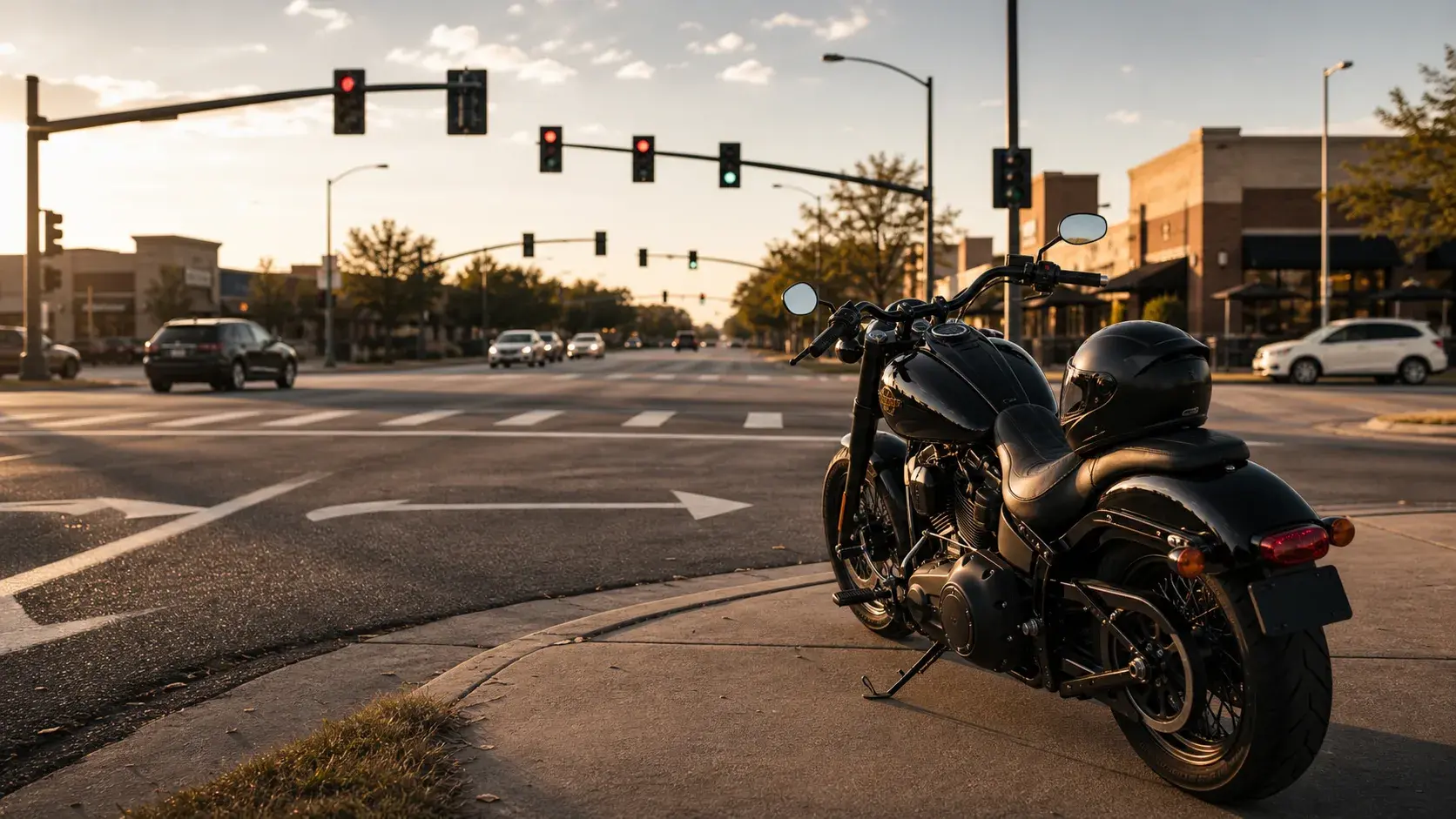
Motorcycle approaching an Oklahoma intersection with visible lanes, traffic controls, and turning traffic

Visibility proof guide

Motorcycle visibility and lane-position evidence guide

How to preserve sight lines, lane position, lighting, cameras, witnesses, and physical evidence when a driver says the motorcycle was not seen.

For accepted motorcycle-injury matters, attorney fees are contingent on recovery and governed by a written engagement agreement.

Step 1

Fix the exact location and movement sequence

Record the roadway, intersection, driveway, lane, direction of travel, turn path, traffic control, and where each vehicle came to rest. A useful sequence identifies what each driver was doing before impact instead of reducing the crash to a label.

  • Mark the travel direction and lane for every involved vehicle.
  • Note turn signals, brake lights, traffic signals, signs, and lane markings.
  • Separate what a witness actually saw from later assumptions about speed or fault.

Step 2

Document the available view

Photograph the approach from more than one lawful, safe location. Include curves, grades, parked vehicles, vegetation, signs, construction, lighting, driveways, median features, and the distance over which a motorcycle could have been visible.

  • Do not stand in traffic or recreate the crash by riding through a dangerous scene.
  • Record the date, time, weather, and any meaningful changes from the crash conditions.
  • Use wide views for context and closer views for specific obstructions or controls.

Step 3

Preserve lighting and conspicuity facts without accepting stereotypes

Save evidence about headlamps, auxiliary lights, turn signals, brake lights, reflectors, helmet, jacket, motorcycle color, and weather or ambient light. These facts should be documented accurately; they should not replace the separate questions of what the other driver could see, when it could be seen, and what each driver did.

  • Photograph the controls and light assemblies before repair or testing changes them.
  • Save gear in its post-crash condition and document where it was found.
  • Do not make unsupported claims about whether a particular color, garment, or light would have prevented the crash.

Step 4

Look for timing and attention evidence

Witnesses, dashcams, helmet cameras, nearby surveillance, traffic systems, 911 audio, vehicle data, phone records obtained through proper process, and event timing may help explain when each driver could see, react, brake, or turn.

  • Write down camera locations and owners before routine overwrite can occur.
  • Preserve original rider-camera files and the device or storage card when possible.
  • Ask witnesses for their own words; do not supply a story for them to repeat.

Step 5

Compare the story with physical evidence

Impact location, scrape patterns, debris, motorcycle and vehicle damage, tire marks, final positions, road geometry, and medical records may support or contradict a driver's account. Keep the physical record intact so qualified review remains possible.

  • Photograph damage before vehicles or gear are repaired or cleaned.
  • Keep broken parts and note who has possession of them.
  • Avoid guessing at speed or distance from a single photograph or damage point.

Step 6

Build a source-to-question ledger before drawing conclusions

For each photograph, video, statement, measurement, report entry, vehicle item, or digital record, keep who supplied or holds it, where and when it was created, whether it is an original or copy, and what remains unknown. Then identify the narrow question it may help answer—location, view, movement, timing, contact, or condition—without treating the item as a conclusion by itself.

  • Label an observation, measurement, estimate, and later interpretation separately.
  • Keep conflicting or incomplete sources in the ledger instead of silently choosing one account.
  • Preserve originals and provenance; use separate copies for annotation, enhancement, clipping, or sharing.

Keep the sight-line and movement evidence.

  • Wide and close scene photographs showing lanes, sight lines, controls, lighting, grades, curves, and obstructions
  • Original camera files, device information, witness contacts, and a map of possible public or private cameras
  • Motorcycle lights, controls, reflectors, broken parts, helmet, jacket, gloves, boots, and mounted electronics
  • Police, 911, bodycam, dashcam, vehicle, phone, tow, repair, and medical records obtained through proper process

Your browser opens its own print options. Rider First does not receive or store the copy you print or save.

A stereotype cannot replace evidence.

  • Recreating the crash in traffic or putting anyone in danger to obtain a photograph
  • Letting a broad 'I did not see the motorcycle' statement substitute for the actual sight-line and timing evidence
  • Changing, repairing, testing, cleaning, or discarding lights, controls, gear, cameras, or broken parts before documentation
  • Using visibility evidence to make unsupported claims about speed, fault, or what would have prevented the crash

Questions

Visibility and lane-position evidence questions.

These answers are general information. A real claim depends on the crash facts, injuries, insurance, venue, deadlines, and available proof.

Does 'I did not see the motorcycle' excuse the other driver?

That statement does not decide the claim. The investigation should examine the roadway, right of way, lookout, timing, lane positions, sight lines, lighting, vehicle movement, witnesses, cameras, and physical evidence.

What should I photograph at an intersection or driveway?

Photograph each approach, lane markings, signs or signals, turn paths, driveways, obstructions, lighting, road grade, vehicle positions, debris, tire marks, and nearby cameras from lawful and safe locations.

Should the motorcycle lights be tested after the crash?

Document their condition first. Testing or powering damaged equipment can alter it or create safety issues. Preserve the motorcycle and ask for qualified guidance before any inspection that may change the evidence.

What if a report assumes the rider was speeding?

Keep a clean copy of the report, identify the exact statement and its stated basis, preserve the scene, vehicle, witness, camera, and timing evidence, and ask the agency about its process for supplemental information.

Case-specific next step

If this question now turns on your crash facts, request a focused review.

Begin with a way to reach you, the names of known people, businesses, or insurers involved, and the crash basics you know. The short summary is optional. Rider First's stated legal-service scope is Oklahoma motorcycle injury matters. Submission does not promise review, response, acceptance, or representation and does not extend a deadline.

Request an Oklahoma case review