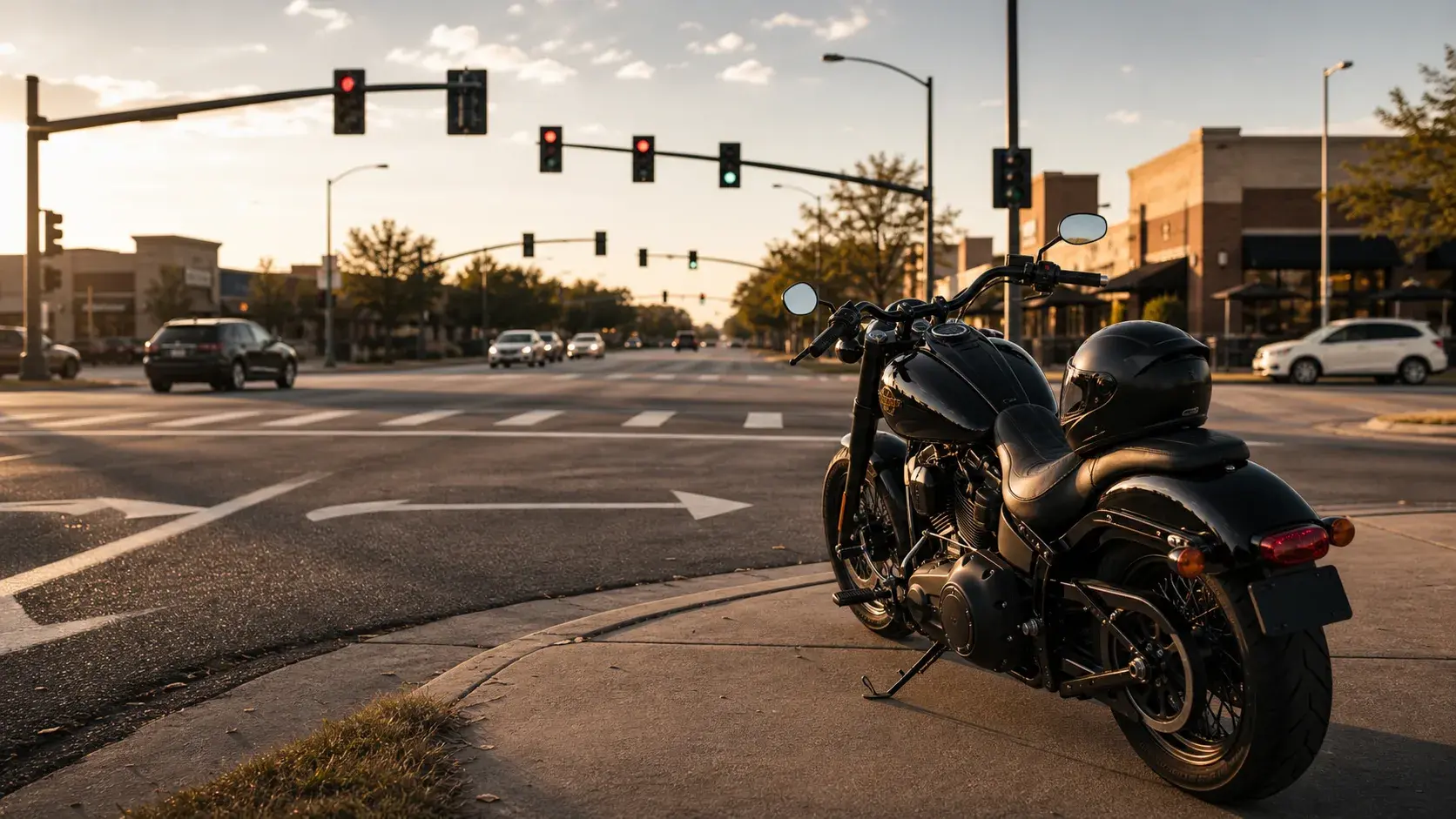
Oklahoma city intersection with a motorcycle stopped safely near marked lanes and traffic lights

Signals, signs, cross traffic

Oklahoma intersection motorcycle collisions

Oklahoma intersection motorcycle collision guidance for crashes involving signals, stop signs, cross traffic, right of way, and nearby video.

For accepted motorcycle-injury matters, attorney fees are contingent on recovery and governed by a written engagement agreement.

Signals, signs, and approaches

What to save for intersection collisions.

An intersection dispute is easier to evaluate when each approach is separated. Use existing images or document the traffic control, sight lines, lane markings, witness viewpoints, and vehicle movements only from a lawful, safe place. Never enter or return to active traffic, trespass, stop where unsafe, or delay medical care to collect more information.

Traffic-light sequence, stop signs, yield signs, lane markings, and turn arrows

Photos from each driver's approach, not just the point of impact

Vehicle damage, debris field, skid marks, final resting positions, and road surface

Witnesses in nearby vehicles, businesses, homes, sidewalks, and parking lots

Camera sources from businesses, traffic systems, buses, fleets, homes, and dashcams

Official process and practical proof

Map each approach before deciding right of way.

Oklahoma Title 47 applies different rules to signal indications, vehicles approaching from different highways, and stop or yield intersections. First identify the control and movement facing each approach. Those rules and records must be applied to the actual facts; a signal, sign, citation, report, or record request does not make civil fault automatic.

Step 1

Name each approach and control

For every rider, driver, cyclist, or pedestrian, record the travel direction, lane, intended movement, entry point, and signal, arrow, stop sign, yield sign, or absence of a visible control on that approach. Keep the control for one approach separate from every other approach.

Step 2

Keep observation separate from inference

Record each person's position and what they personally saw or heard, including a signal color or arrow, sign, vehicle placement, movement, or sound. Mark uncertainty and facts learned later. Preserve conflicts instead of reconciling accounts or inferring signal phase, speed, or right of way from someone else's conclusion.

Step 3

Route signal questions without deciding responsibility

ODOT says a report that an installed traffic signal is out or not timed well should go to the city or county, even on a state or U.S. highway. That makes the city or county a practical first contact for asking who holds responsive records; it does not establish the legal custodian, legal responsibility, notice, a defect, record existence, public access, or fault.

Step 4

Keep collision and traffic-control records separate

Service Oklahoma supplies a collision-report request route and access requirements. Keep that report separate from any city or county signal, timing, phase, maintenance, or work-order inquiry, and save each request and response. A report, citation, signal record, missing record, or unavailable media does not decide civil fault or protect a deadline.

Questions that matter in intersection collisions.

Signal and sign proof

The evaluation depends on practical facts: what the signal or sign showed for each approach, where the vehicles were, whether anyone stopped, and how each movement entered the conflict.

Approach visibility

Photos from each direction can show obstructions, lighting, lane shifts, signs, parked vehicles, construction, or traffic flow that affected what drivers saw.

Witness viewpoint

Record each witness's position and what they personally observed. Keep a signal color, vehicle movement, or sound separate from conclusions about fault, speed, or who had the right of way.

Coverage questions after intersection collisions.

Identify every driver and vehicle entering the conflict, including work, delivery, rideshare, or fleet use. The rider's own UM/UIM and health-related coverage may also matter if responsibility or limits remain disputed.

  • Liability coverage for every vehicle entering the intersection
  • Uninsured or underinsured motorist coverage when a driver has too little coverage
  • Commercial coverage if a delivery, work, fleet, or rideshare vehicle is involved
  • Health insurance, medical liens, wage loss, and property damage paperwork
Review coverage issues

Questions

Questions about intersection collisions.

These answers are general information. A real claim depends on the crash facts, injuries, insurance, venue, deadlines, and available proof.

What matters most after an intersection motorcycle crash?

Right of way, signal or sign control, lane position, approach visibility, vehicle damage, witness statements, nearby video, and the rider's medical timeline often matter early.

Can video help if drivers disagree about the light?

Yes. Nearby businesses, traffic systems, buses, fleet vehicles, dashcams, and homes may capture the approach, signal cycle, or impact. Record each possible source and preserve any lawfully obtained original file and its provenance. A possible camera is not proof that the event was recorded or retained.

Does a ticket decide the injury case?

A ticket can be important, but it does not decide the entire civil claim. The injury case still depends on evidence, injuries, insurance, and the full crash facts.

Next steps

Describe the driver movements and traffic controls at the intersection.

Share the intersection, direction and lane for each known vehicle, the control facing each approach, responder and report basics, and where possible video may exist. The initial form accepts no uploads; keep medical files, insurance or government identifiers, witness contact details, and original media out of the first message.

For accepted motorcycle-injury matters, attorney fees are contingent on recovery and governed by a written engagement agreement.

Request a case review